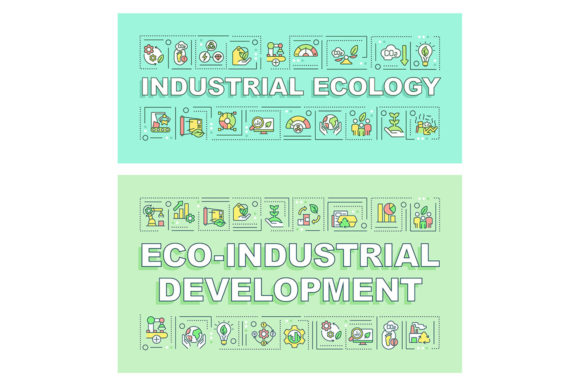
Industrial Ecology Word Concepts Banners
As an embroidery designer with years of experience, I’ve seen my fair share of digital design files. But when I came across the Industrial Ecology Word Concepts Banners, I knew it had potential for real-world use. The concept is clean, the message is clear, and the visual style is modern—perfect for a range of embroidery projects. Let me walk you through how this design performs in practice.
First Impressions: A Design That Speaks Volumes
The Industrial Ecology Word Concepts Banners immediately caught my attention with its bold typography and minimalist layout. The use of Arial-Black font gives it a strong, authoritative feel, while the color background and infographics add a professional touch. It’s a design that feels both educational and visually engaging, making it ideal for eco-conscious brands or businesses focused on sustainability.
The isolated typography and vector illustration make it easy to adapt to different embroidery formats. Whether you’re working on a custom apparel piece or a personalized gift, the design has a natural flow that doesn’t overwhelm the fabric. It’s not overly complex, which is a big plus for embroidery work where simplicity often translates to better stitch results.
Real-Life Use Cases: From Tote Bags to Holiday Gifts
I tested the Industrial Ecology Word Concepts Banners on a few different projects, starting with a tote bag design. The banner’s layout worked well on a large hoop, allowing for clear stitching without too much strain on the machine. The text was easy to follow, and the overall shape fit nicely on the front of the bag without looking cramped.
When I tried it on a sweatshirt, the design maintained its clarity, especially with a fill stitch. The contrast between the colored background and the text made it stand out, which is important for visibility. For baby items, like a onesie or a blanket, the design felt appropriate but needed careful placement to avoid any sharp edges that might irritate sensitive skin.
This design also works well for holiday gifts. Imagine an embroidered cap or a kitchen towel with the Industrial Ecology Word Concepts Banners. It adds a subtle yet meaningful touch that can elevate a handmade product or a small shop item. The design’s versatility makes it a great addition to any craft business or Etsy store.
Where to Be Cautious: Practical Considerations
While the Industrial Ecology Word Concepts Banners is generally well-suited for most embroidery projects, there are a few areas where caution is needed. On small hoop sizes, the design may require some adjustment to ensure all elements are captured properly. If you're working with textured fabrics or thin materials, the stitch density could be an issue if not managed carefully.
For stretchy fabrics or dark backgrounds, the thread colors need to be chosen with care. A light-colored thread on a dark fabric might not show up as intended, while a dark thread on a light fabric could look too harsh. Always test the design on scrap fabric before committing to a finished product.
Curved surfaces like caps or hats can also pose challenges. The Industrial Ecology Word Concepts Banners is best suited for flat, even surfaces. If you're planning to use it on a patch or a small applique, make sure the design is scaled appropriately to avoid distortion during the stitching process.
Impact on Visual Appeal and Customer Perception
One of the biggest advantages of the Industrial Ecology Word Concepts Banners is how it enhances the visual appeal of a finished product. The clean layout and bold typography create a sense of professionalism that can boost customer trust. When customers see a well-designed embroidered item, they’re more likely to perceive it as high-quality and worth the price.
This design also plays a role in brand consistency. If you're running a small shop or a craft business focused on sustainability, the Industrial Ecology Word Concepts Banners can help reinforce your brand message. It’s a subtle way to communicate values without being too overt.
From a buyer engagement standpoint, the design is eye-catching and memorable. It’s perfect for personalized gifts, where the message matters as much as the craftsmanship. Whether it’s a custom apron, a holiday ornament, or a boutique product, the Industrial Ecology Word Concepts Banners adds value and meaning to the finished item.
Embroidery Designer Notes: What to Keep in Mind
Before using the Industrial Ecology Word Concepts Banners in your own projects, here are a few practical tips:
- Test on scrap fabric first to check how the design looks and stitches.
- Review thread color contrast to ensure visibility on your chosen fabric.
- Check stitch density to avoid issues with thick or dense areas.
- Confirm hoop size to make sure all elements are included in the design.
- Inspect small details for accuracy and clarity.
- Test in black and white mockups to see how the design translates without color.
- Compare light and dark fabric backgrounds to ensure the design works in both scenarios.
- Use proper stabilizer for delicate or stretchy fabrics.
- Verify licensing before selling finished items or digital products.
These steps will help you get the most out of the Industrial Ecology Word Concepts Banners and avoid common pitfalls in embroidery work.
Final Thoughts: A Thoughtful Design for Real Projects
The Industrial Ecology Word Concepts Banners is a solid choice for embroidery designers, small business owners, and crafters looking for meaningful, professional-looking designs. It’s not just a pretty image—it’s a functional asset that can enhance a wide range of projects. Whether you’re creating custom apparel, personalized gifts, or commercial embroidery pieces, this design offers both aesthetic and practical value.
If you're looking for a graphic template that can translate well into real-world embroidery, the Industrial Ecology Word Concepts Banners is definitely worth considering. Just remember to test it thoroughly and tailor it to your specific needs. With the right approach, it can become a valuable part of your design toolkit.